Baptism
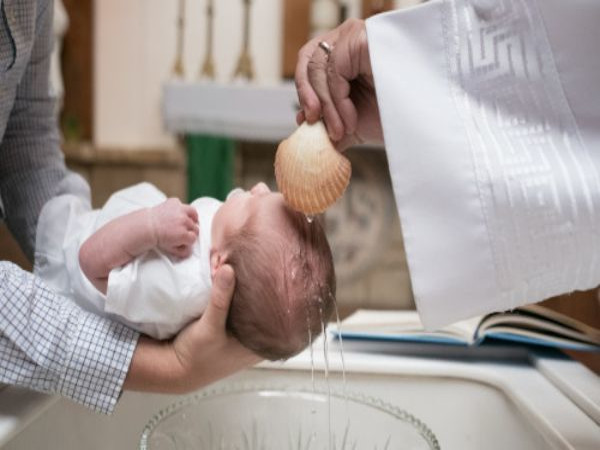
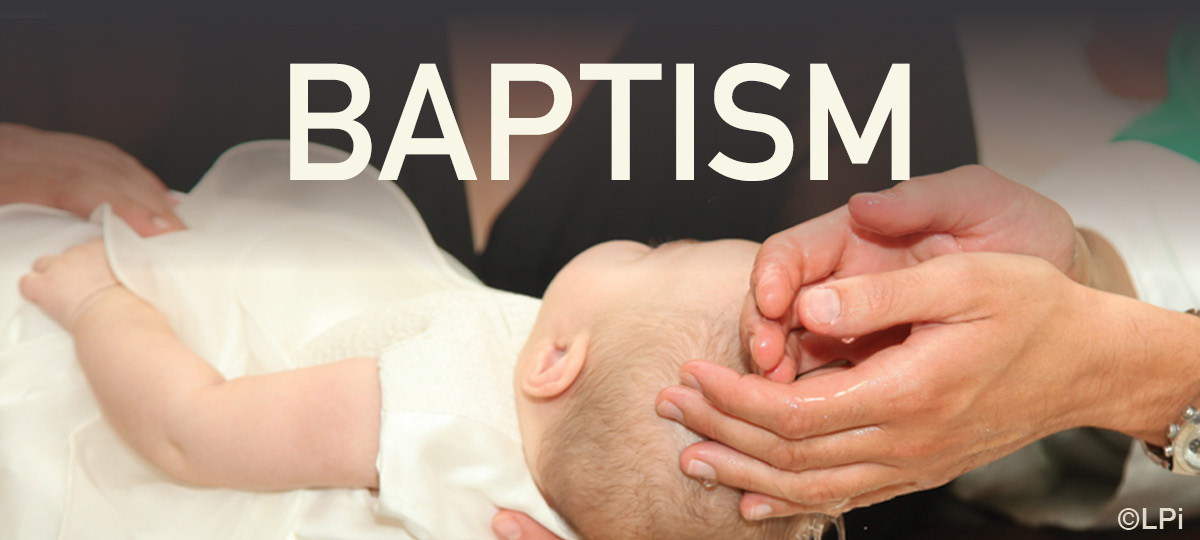
The Sacrament of Baptism
The Catechism teaches:
"The fruit of Baptism, or baptismal grace, is a rich reality that includes forgiveness of original sin and all personal sins, birth into the new life by which man becomes an adoptive son of the Father, a member of Christ and a temple of the Holy Spirit. By this very fact the person baptized is incorporated into the Church, the Body of Christ, and made a sharer in the priesthood of Christ" (CCC 1279).
At Baptism, we receive and celebrate God’s free gift of grace and salvation through Christ. It is really God who has chosen us. Thus, Baptism is the beginning of a life-long journey of knowing and following Jesus. Baptism is also the first sacrament of initiation; later will come First Eucharist and Confirmation. The St. Joseph community welcomes your child with open arms and extends its loving support in living a life that reflects Jesus to the world.
You are called to grow in God’s love with your child. As you share your faith with your child, your relationship with God will deepen. As you pray with your family, attend Mass and share your Christian values, your family will grow closer together in love for one another and God. Your child’s Baptism is only the beginning!
In 1992, Pope John Paul II directed the publication of “The Catechism of the Catholic Church.” Paragraph 2226 explains the words used to bless the parents of the baptized child: “That they may be the best of teachers of their children in the way of faith.” Education in the faith by the parents should begin in the child’s earliest years.
Baptismal Signs & Symbols
- Water: The waters of baptism recall Jesus’ own baptism by John the Baptist in the river Jordan. Water is a symbol of cleansing and renewal as we begin a new life in Christ. We are washed clean of sin.
- Oil: At baptism we are first anointed with the oil of the Catechumens and then we are anointed into the life of Christ as “priest, prophet and king
- Light: The child’s individual baptismal candle is lit from the Paschal or Easter candle that stands in the church as a sign of Christ’s light in the world. At baptism, we receive the light of Christ and are called forth to share this light with the world.
- White garment: The white garment that is placed upon us at baptism is a symbol of Christ’s victory over death and his glorious resurrection. Likewise, the white garment or pall that is placed over the coffin at the time of death recalls our baptismal promises and reminds us that we are destined for eternal life.
Baptism requirements for your First Child under the age of 7
- To have your child baptized, you must register with the parish
- A Baptism Prep Class is required for the parents; however, it is only optional for the God parents. Sign up for our next Class by calling 913-631-5983 or emailing This email address is being protected from spambots. You need JavaScript enabled to view it.
- Once the prep class is completed and the Baptism paperwork is completed and submitted, the Baptism can be scheduled. We typically hold Baptisms on Sundays after the noon Mass in 1:30, 2:30 and 3:30 time slots
Requirements of Baptism for your First Child over the age of 7
- To have your child baptized, you must register with the parish
- Enroll your child in a religious education class to be prepared for the Baptism. If over 18 a person would sign up for an RCIA class. Contact the Christian Formation team to register your child. This email address is being protected from spambots. You need JavaScript enabled to view it. or call 913-248-4592
Requirements for selecting God Parents
Select Faith-filled Catholics who are at least 16 years old, fully initiated in the Catholic Faith and practicing their faith. This person should be someone you know who will inspire your child throughout their lifetime and encourage them to learn and grown in their faith and overall holiness.
One male, and one female may be chosen. Only one Catholic God-Parent is required, the other can be from another Christian denomination, and baptized.
For more information about Baptizing your child, contact the Parish Office at 913-631-5983 or email This email address is being protected from spambots. You need JavaScript enabled to view it.
Reconciliation
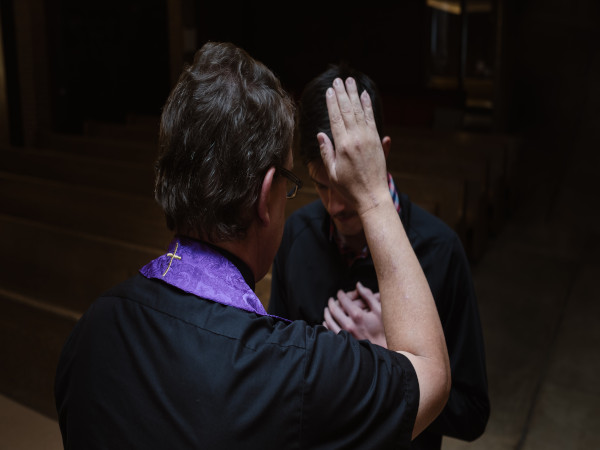
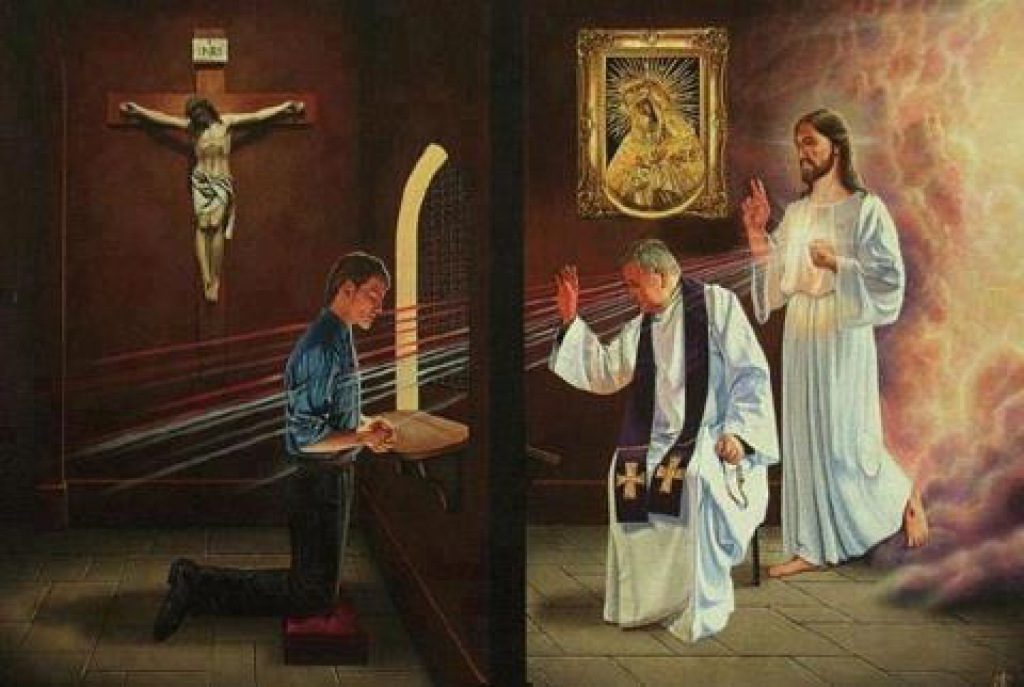
What Is Reconciliation?
Reconciliation (also known as confession or Penance) is a sacrament instituted by Jesus Christ in his love and mercy to offer sinners forgiveness for offenses committed against God. At the same time, sinners reconcile with the Church, because it is also wounded by our sins.
Every time we sin, we hurt ourselves, other people, and God. In Reconciliation, we acknowledge our sins before God and his Church. We express our sorrow in a meaningful way, receive the forgiveness of Christ and his Church, make reparation for what we have done, and resolve to do better in the future.
The forgiveness of sins involves four parts:
- Contrition: a sincere sorrow for having offended God, and the most important act of the penitent. There can be no forgiveness of sin if we do not have sorrow and a firm resolve not to repeat our sin.
- Confession: confronting our sins in a profound way to God by speaking about them—aloud—to the priest.
- Penance: an important part of our healing is the “penance” the priest imposes in reparation for our sins.
- Absolution: the priest speaks the words by which “God, the Father of Mercies” reconciles a sinner to himself through the merits of the Cross.
How to Make a Good Confession
Confession is not difficult, but it does require preparation. We should begin with prayer, placing ourselves in the presence of God, our loving Father. We seek healing and forgiveness through repentance and a resolve to sin no more. Then we review our lives since our last confession, searching our thoughts, words, and actions for that which did not conform to God’s command to love him and one another through his laws and the laws of his Church. This is called an examination of conscience.
To make an examination of conscience:
- Begin with a prayer asking for God’s help.
- Review your life with the help of some questions, which are based on the Ten Commandments (see next panel).
- Tell God how truly sorry you are for your sins.
- Make a firm resolution not to sin again.
Examination of Conscience
Recall your sins. Prayerfully ask yourself what you have done with full knowledge and full consent against God’s and the Church’s commandments.
- Do I pray to God every day? Have I thanked God for his gifts to me?
- Did I put my faith in danger through readings contrary to Catholic teachings or involvement in non-Catholic sects? Did I engage in superstitious practices: palm reading or fortune-telling?
- Did I take the name of God in vain? Did I curse or take a false oath?
- Did I miss Mass on Sundays or holy days of obligation through my own fault? Am I attentive at Mass? Did I keep fast and abstinence on the prescribed days?
- Did I disobey my parents and lawful superiors in important matters?
- Did I hate or quarrel with anyone, or desire revenge? Did I refuse to forgive? Was I disrespectful?
- Did I get drunk? Did I take illicit drugs?
- Did I consent to, recommend, advise, or actively take part in an abortion?
- Did I willfully look at pornography, entertain impure thoughts, or engage in impure conversations or actions? Did I use artificial means to prevent conception?
- Was I unfaithful to my spouse? Did I engage in sexual activity outside of marriage?
- Did I steal or damage another’s property? Have I been honest and just in my business relations?
- Have I been responsive to the needs of the poor and respected the dignity of others?
- Did I tell lies? Did I sin by calumny, or detraction, of others? Did I judge others rashly in serious matters?
- Have I envied other people?
10 Commandment Examination of Conscience
Rite of Reconciliation
Reconciliation may be face-to-face or anonymous, with a screen between you and the priest. Choose the option that is the most comfortable for you.
- The priest gives you a blessing or greeting. He may share a brief Scripture passage.
- Make the Sign of the Cross and say, “Bless me, father, for I have sinned. My last confession was [give the number of weeks, months, or years].”
- Confess all of your sins to the priest. The priest will help you to make a good confession. If you are unsure about how to confess or you feel uneasy, just ask him to help you. Answer his questions without hiding anything out of fear or shame. Place your trust in God, a merciful Father who wants to forgive you.
- Following your confession of sins, say, “I am sorry for these and all of my sins.”
- The priest assigns you a penance and offers advice to help you be a better Catholic.
- Say an Act of Contrition, expressing your sorrow for your sins. The priest, acting in the person of Christ, then absolves you from your sins.
- Act of Contrition - God, I am heartily sorry for having offended you, and I detest all my sins because I dread the loss of heaven and the pains of hell; but most of all because they offend you, my God, who are all good and deserving of all my love. I firmly resolve with the help of your grace to confess my sins, do penance, and to amend my life. Amen.
See more information on why we confess to a priest: More Information
If you or your children need to make this Sacrament, see the Christian Formation page to enroll in Religious Classes.
Opportunities for Confessions at St. Joseph:
Saturdays - 3:30pm
Wednesdays: 7:00am or 7:00 pm
By Appointment with any of our Priests.
For Questions about being formed in Religious Education for this Sacrament please contact: Michal Anne Gillig - 913-248-4581
First Communion
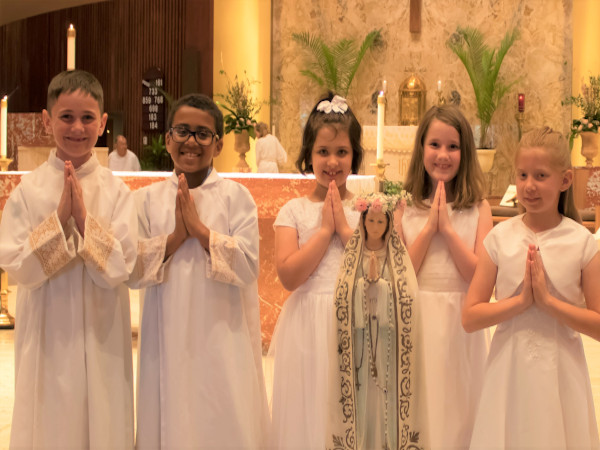
The Sacrament of First Communion
The Church Teaches:
"At the Last Supper, on the night he was betrayed, our Savior instituted the Eucharistic sacrifice of his Body and Blood. This he did in order to perpetuate the sacrifice of the cross throughout the ages until he should come again, and so to entrust to his beloved Spouse, the Church, a memorial of his death and resurrection: a sacrament of love, a sign of unity, a bond of charity, a Paschal banquet 'in which Christ is consumed, the mind is filled with grace, and a pledge of future glory is given to us.'"
The Eucharist is "the source and summit of the Christian life."134 "The other sacraments, and indeed all ecclesiastical ministries and works of the apostolate, are bound up with the Eucharist and are oriented toward it. For in the blessed Eucharist is contained the whole spiritual good of the Church, namely Christ himself, our Pasch."
Requirements:
“For the administration of the Most Holy Eucharist to children, it is required that they have sufficient knowledge and careful preparation so as to understand the mystery of Christ according to their capacity and can receive the Body of the Lord with faith and devotion.”
“It is the responsibility, in the first place, of parents and those who take the place of parents as well as of the pastor to see that children who have reached the use of reason are correctly prepared and are nourished by the divine food as early as possible, preceded by sacramental confession; it is also for the pastor to be vigilant lest any children come to the Holy Banquet who have not reached the use of reason or whom he judges are not sufficiently disposed.”
You must register with the parish.
- The candidate must be validly baptized as recognized by the Catholic Church.
- Enroll your child in religious education class to be prepared for the sacrament of First Communion. If over 18 a person would sign up for an RCIA class.
Preparation:
Normally, preparation for First Holy Communion takes place during the second-grade year. It is done separately but within the same classroom structure as the preparation for First Reconciliation which is celebrated prior to First Holy Communion.
The preparation we provide includes:
- A solid understanding of the Eucharist both as sacrifice and meal.
- Reflection on the Eucharist from Scripture and Church teaching.
- Instruction on the proper reception of Holy Communion.
- Inspiration, appreciation and love for the Eucharist and particularly Holy Communion as a means of vital union with Christ and the Church and strength for Christ-like living.
For more information concerning First Communion prep and enrollment click here. Or contact Michal Anne Gillg at 913-248-4581, This email address is being protected from spambots. You need JavaScript enabled to view it.
Confirmation
The Sacrament of Confirmation
The Church teaches:
Baptism, the Eucharist, and Confirmation together constitute the "sacraments of Christian initiation," whose unity must be safeguarded. The reception of the sacrament of Confirmation is necessary for the completion of baptismal grace. For "by the sacrament of Confirmation, [the baptized] are more perfectly bound to the Church and are enriched with a special strength of the Holy Spirit. Hence, they are, as true witnesses of Christ, more strictly obliged to spread and defend the faith by word and deed."
Receiving the Sacrament of Confirmation:
- The sacrament of Confirmation is administered by anointing with the holy oil of chrism and the imposition of hands on the confirmandi.
- In this diocese, the Archbishop is the ordinary minister of Confirmation. This ministry can be delegated to a priest under special circumstances.
Selecting a Confirmation Sponsor:
- In order to keep the connection with Baptism, it is recommended that the godparent also be the sponsor. However, it is permissible to choose another as sponsor.
- The Confirmation sponsor must be a fully initiated Catholic, who is practicing the faith, and have the aptitude and intention of fulfilling this function.
- He/she is to have completed the sixteenth year of age.
- They are to lead a life of faith in keeping with the function which they have been asked to assume.
- They are not to be bound by any canonical penalty legitimately imposed or declared.
- The candidate’s father or mother is not to be the sponsor.
Requirements of Confirmation for Your Child:
- To have your child confirmed, you must register with the parish, and your child must have already been Baptized.
- For those not attending St. Joseph School, enroll your child in religious education class to be prepared for Confirmation. If over 18 a person would sign up for an RCIA class.
- Confirmation prep is a 2-year program typically beginning in the 7th grade.
For more information concerning Confirmation prep contact Michal Anne Gillig at 913-248-4581 or email This email address is being protected from spambots. You need JavaScript enabled to view it..
Weddings
Sacrament of Marriage
Sacred Scripture begins with the creation and union of man and woman and ends with "the wedding feast of the Lamb" (Rev 19:7, 9). Scripture often refers to marriage, its origin and purpose, the meaning God gave to it, and its renewal in the covenant made by Jesus with his Church. Man and woman were created for each other.
By their marriage, the couple witnesses Christ's spousal love for the Church. One of the Nuptial Blessings in the liturgical celebration of marriage refers to this in saying, "Father, you have made the union of man and wife so holy a mystery that it symbolizes the marriage of Christ and his Church."
The Sacrament of Marriage is a covenant, which is more than a contract. Covenant always expresses a relationship between persons. The marriage covenant refers to the relationship between the husband and wife, a permanent union of persons capable of knowing and loving each other and God. The celebration of marriage is also a liturgical act, appropriately held in a public liturgy at church. Catholics are urged to celebrate their marriage within the Eucharistic Liturgy.
Congratulations
The St. Joseph Parish Family rejoices in your decision to love and marry each other. We are happy that you have decided to come to our parish to prepare to celebrate the Sacrament of Matrimony. As you know you are not just preparing for the Wedding Day, but a new life together as husband and wife.
No doubt you will spend much time in planning your big day with attire, invitations, receptions, etc. But it is now most important for you to take a keen interest in the Sacrament of Matrimony.
In order to make sure that you are willing and prepared to enter into the Sacrament of Matrimony, and in order to preserve the sacredness and meaning of this sacrament, St. Joseph and the Archdiocese of Kansas City, KS present these Wedding Guidelines for our couples who are taking this most significant step. Please read it over carefully so that you have no problem with what is required, and things will flow smoothly for you.
It is our hope that your Wedding will be a beautiful celebration and we want to help you be assured of this. It is even more our hope that your marriage is beautiful, life-giving and truly sacramental in every way
What Preparation is Involved?
The Catholic Church takes marriage very seriously and thus requires a period of preparation and discernment including:
- One year needed for preparation of the couple prior to the date
- An initial meeting with one of our Parish Priests prior to setting a date
- The date should be arranged with the Church FIRST before any reception plans are made.
- 7 weeks of Marriage Prep class, usually in the winter(Jan-Feb) or summer(June-July)
- A Natural Family Planning Class
- FOCCUS – the assessment is reviewed by one of our Priests
- Meeting with the Wedding Planner for the church
What Documents are needed and submitted to the Archdiocese?
- A Baptismal Certificate from the Bride and the Groom DATED WITHIN 6 months of the wedding (NOT YOUR ORIGINAL from when you were born) You can usually contact the original church where it happened and ask them to send it to us.
- A certificate indicating the completion of the Marriage Prep Class – provided to the office/church upon completion.
- Introduction to NFP(Natural Family Planning) Class & certificate
- A MARRIAGE LICENSE obtained WITHIN 6 months of the Wedding. Make sure your Marriage License is at the Parish Office 1 month prior to your wedding day.
- Signed Archdiocese documents that will be reviewed at the time of discussing the FOCCUS test with the Priest.
What About the Wedding Itself?
The actual details regarding the Marriage Rite of the Catholic Church are the last thing that are planned together. Before this discussion takes place there is much to talk about regarding the couple’s relationship with each other and God, plans for a future family, communication etc. Please see the Wedding Guide for specific details about the wedding dos and don’ts, decorating, fees, etc.
Wedding Times
Weddings/Ceremonies take place on FRIDAY evenings from 5-6 or SATURDAY afternoons at 1pm. The rehearsal can be on the Thursday or Friday prior to the wedding in the evening.
Planning the Wedding Liturgy
- Readings: You may have two readings from Scripture read by friends or relatives. The Prayer of the Faithful may also be read by friends or relatives. The priest/deacon will read the Gospel. So, you need to choose 3 people to read. Since Scripture must be heard and understood, the person (s) you choose should have a strong and articulate speaking voice.
- If you are having a Mass, you may ask 2 people to bring up the Offertory Gifts (bread and wine).
- If you include children in your wedding party, we ask that they be at least five years old. If they carry rings they should carry props, the real rings should be held by the Best Man or Maid of Honor. It is strongly advised that the couple exercise good judgment when making their choice regarding the involvement of children.
- Visiting Priests and Deacons: Priests and Deacons from outside St. Joseph are most welcome. They need to be delegated by our pastor and have a letter from their Diocesan Chancery indicating that they are in good standing. They are asked to respect the practice of the celebration of weddings at St. Joseph
The Rehearsal
The rehearsal date should be set at your First meeting. It is usually the evening before the wedding. It includes the wedding party and anyone else taking part in the ceremony (readers, gift bearers etc.) Please ask these people to commit themselves to both the wedding and the rehearsal. PLEASE BRING YOUR MARRIAGE LICENSE TO THE REHEARSAL as well as any payments that are due to the wedding coordinator. We want you to come on your wedding day and not have to worry about any paperwork or money, so we take care of this at the rehearsal. See the Wedding Guide for payment details.
Please commit to being on time for the wedding and the rehearsal and take this commitment seriously. There is much happening in our parish on weekends. Thank you!
Music
Sacred music is an essential part of the Church’s tradition of prayer, it sets the tone for the experience. Music invites the assembly to participate with heart, mind and spirit. Music is not just a “nice touch” to the ceremony or liturgy, but indeed draws the whole person into the celebration; it is therefore not an option not to have music since it is very much a part of the Sacramental celebration. Our Music Director will assist you in the selection of the music for your wedding. Popular songs that have special meaning for the couple are more appropriate at the reception. To schedule an appointment to plan your music selections, contact our Music minister through our parish office. Please make your appointment 2-3 months before the wedding.
For more information about weddings please contact the Parish Office at 913-631-5983
Anointing of the Sick
Anointing of the Sick
“Is anyone among you sick? …they should pray over him and anoint [him] with oil in the name of the Lord.” ~James 5:14
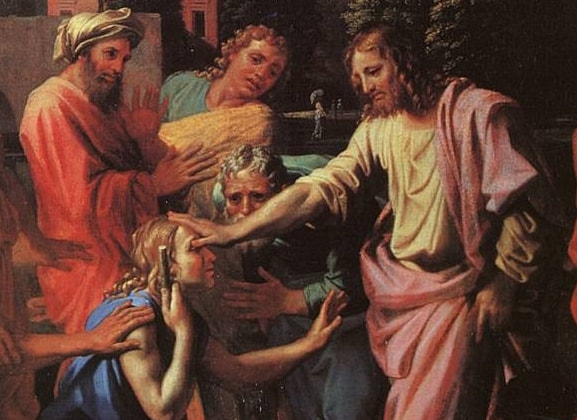
In the Church's Sacrament of Anointing of the Sick, through the ministry of the priest, it is Jesus who touches the sick to heal them from sin – and sometimes even from physical ailment. His cures were signs of the arrival of the Kingdom of God. The core message of his healing tells us of his plan to conquer sin and death by his dying and rising.
The Rite of Anointing tells us there is no need to wait until a person is at the point of death to receive the Sacrament. A careful judgment about the serious nature of the illness is sufficient.
When the Sacrament of Anointing of the Sick is given, the hoped-for effect is that, if it be God's will, the person be physically healed of illness. But even if there is no physical healing, the primary effect of the Sacrament is a spiritual healing by which the sick person receives the Holy Spirit's gift of peace and courage to deal with the difficulties that accompany serious illness or the frailty of old age.
At St. Joseph’s Parish we encourage our Parishioners to contact us prior to surgeries, or when notified of major illnesses, so that one of our Priests can come and give you an anointing. You can also try to ask them after Mass to give you this anointing. This is the same sacrament that is provided for people who are close to dying. It is such a blessing and powerful gift.
If you need to make an appointment, please call the Parish office to schedule at 913-638-5983. If it is an emergency, and the office is closed, leave a message on the “After hour emergency” line.
Funeral Services & Memorials
Planning a Funeral or Memorial Service
"At the death of a Christian, whose life of faith was begun in the waters of Baptism and strengthened at the Eucharistic table, the Church intercedes on behalf of the deceased because of its confident belief that death is not the end, nor does it break the bonds forged in life. The Church also ministers to the sorrowing and consoles them in the funeral rites with the comforting Word of God and the Sacrament of the Eucharist."
(Order of Christian Funerals, no. 4)
The Catholic funeral rite is divided into several stations, or parts, each with its own purpose. For this reason, we recommend following the complete structure and making use of each station.
Vigil Service (Wake)
"At the vigil, the Christian community keeps watch with the family in prayer to the God of mercy and finds strength in Christ's presence" (Order of Christian Funerals, no. 56). The Vigil Service usually takes place during the period of visitation and viewing at the funeral home. It is a time to remember the life of the deceased and to commend him/her to God. In prayer we ask God to console us in our grief and give us strength to support one another.
The Vigil Service can take the form of a Service of the Word with readings from Sacred Scripture accompanied by reflection and prayers. It can also take the form of one of the prayers of the Office for the Dead from the Liturgy of the Hours. The clergy and your funeral director can assist in planning such service.
It is most appropriate, when family and friends are gathered together for visitation, to offer time for recalling the life of the deceased. For this reason, eulogies are usually encouraged to be done at the funeral home during visitation or at the Vigil Service.
Funeral Liturgy
The funeral liturgy is the central liturgical celebration of the Christian community for the deceased. When one of its members dies, the Church encourages the celebration of the funeral liturgy at a Mass. When Mass cannot be celebrated, a funeral liturgy outside Mass can be celebrated at the church or in the funeral home.
At the funeral liturgy, the Church gathers with the family and friends of the deceased to give praise and thanks to God for Christ's victory over sin and death, to commend the deceased to God's tender mercy and compassion, and to seek strength in the proclamation of the Paschal Mystery. The funeral liturgy, therefore, is an act of worship, and not merely an expression of grief.
Rite of Committal (Burial or Interment)
The Rite of Committal, the conclusion of the funeral rite, is the final act of the community of faith in caring for the body of its deceased member. It should normally be celebrated at the place of committal, that is, beside the open grave or place of interment. In committing the body to its resting place, the community expresses the hope that, with all those who have gone before us marked with the sign of faith, the deceased awaits the glory of the resurrection. The Rite of Committal is an expression of the communion that exists between the Church on earth and the Church in heaven: the deceased passes with the farewell prayers of the community of believers into the welcoming company of those who need faith no longer but see God face-to-face.
Funeral Mass Preparation at St. Joseph's Church
- The Parish office is usually notified by the Funeral Home for the request of a funeral service. When they contact the church office, we will work together to arrange the funeral services & burial times.
- Once the Funeral Home has contacted us, we will arrange a priest for the service. The priest will contact the family to arrange the details of the service including the readings, petitions, gift-bearers, and information about the deceased. The music director will reach out about the options for music during the service.
- Typically the family chooses any or all of these services: Visitation, Rosary, Funeral Mass, & Burial. Then we offer an option for a Luncheon at our church in McDevitt Hall. The Visitation & Rosary can be held at our church the day of the mass or the night before at most Funeral Homes.
FAQs
- Can we have a slide show of the deceased at the church?
- Yes, we have an option to play a slide show either in the Narthex of the church or in McDevitt hall if there is a Luncheon
- Does the church offer or make the prayer cards, guest books, or programs for the funeral?
- No, these items need to be made or purchased separately for the service
- Are we able to play Non-liturgical music for the funeral?
- No, only approved hymns are approved for the mass and funeral, however outside music can be played if there is a luncheon or reception afterwards.
- What fees are involved with the funeral?
- There is not a fee for the funeral service, however there is typically a stipend given to the organist and/or cantor, and then an honorarium for the altar servers, and Priest, which is optional. Most of these fees are paid directly from the funeral home.
For More information please contact the Parish Office: Parish Office at 913-631-8923 or email This email address is being protected from spambots. You need JavaScript enabled to view it..